Sortowanie
Źródło opisu
Katalog Mediateki
(3)
Forma i typ
Książki
(3)
Dostępność
dostępne
(3)
Placówka
Wypożyczalnia
(3)
Autor
Soh Bejeng Ndikung Bonaventure
(1)
Sumba Eric Otieno
(1)
Rok wydania
2020 - 2026
(3)
Kraj wydania
Polska
(3)
Język
angielski
(3)
niemiecki
(1)
Temat
Wystawy sztuki
(3)
Sztuka
(1)
Temat: miejsce
Afryka
(1)
Berlin (Niemcy)
(1)
Brazylia
(1)
Gatunek
Sztuka Afryki
(1)
Sztuka brazylijska
(1)
3 wyniki Filtruj
Książka
W koszyku
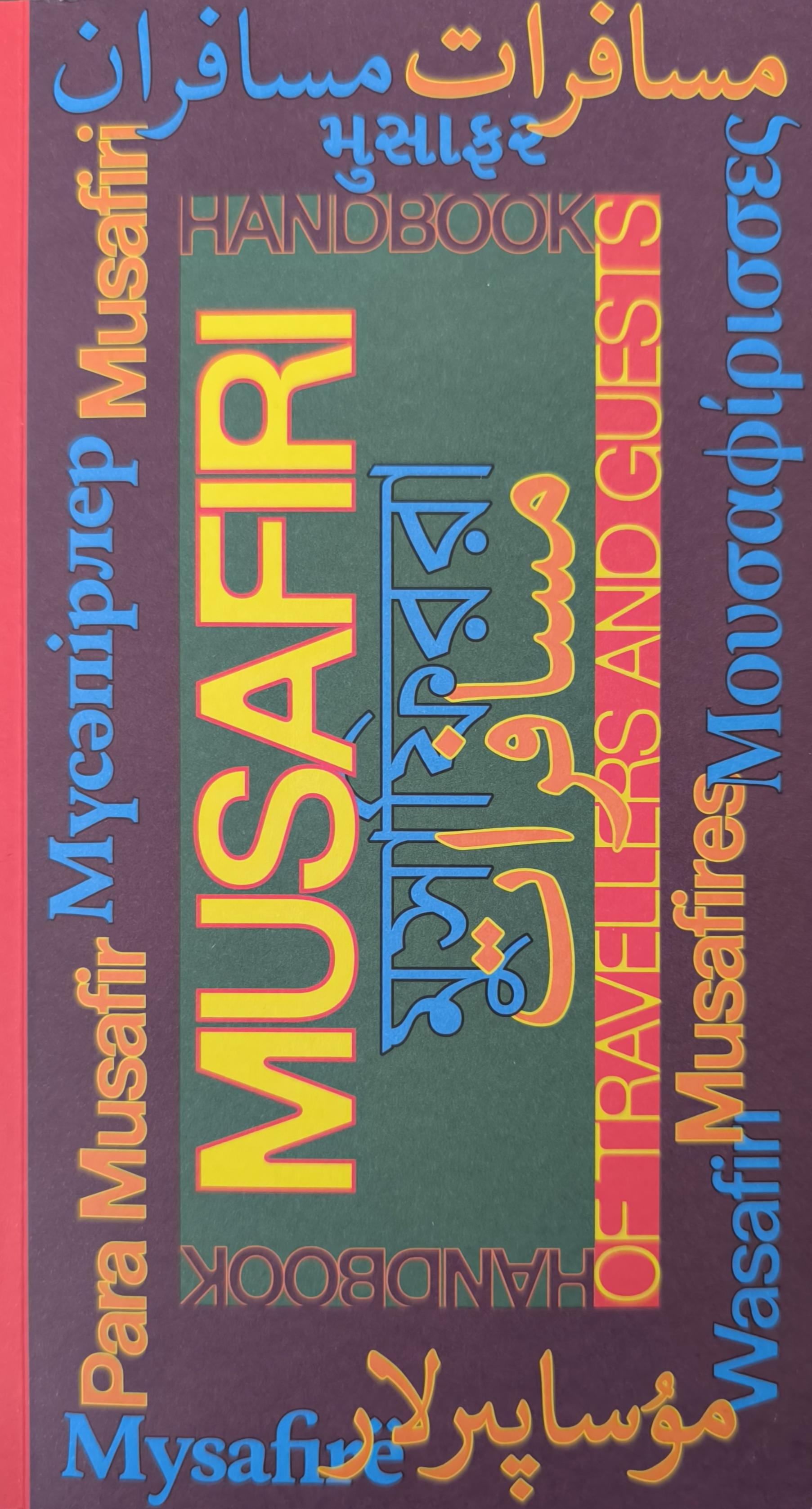
A wide range of languages have adopted some form of the Arabic word "musafir," including Romanian, Turkish, Farsi, Urdu, Hindi, Swahili, Kazakh, Malay and Uyghur, among others, showing how the term has traveled all the way to East Asia in one direction, and through parts of Africa in the other. Throughout these diverse cultural spaces, the term usually still refers to its original meaning, "traveler." But in some languages, such as Turkish and Romanian, it has come to mean "guest." The intersection of these two ideas — seeing the traveler as a welcomed guest — has inspired a new exhibition at the Haus der Kulturen der Weltin Berlin. Titled "Musafiri: Of Travelers and Guests," the contemporary art show and research project revolves around questions of travel and hospitality: Throughout history, how were the world's travelers greeted by the people they encountered? What can we learn from different cultures' traditions and policies of hospitality towards visitors? And how can they inspire a modern, pluralistic world where travelers and migrants feel welcome? These questions are timeless, "but it is rather urgent" to look into them today, "in a time when traveling is not an easy thing. In a time when we see the mounting of walls, of fortresses, of massive deportations, we must come back to these basic things," said the director of the Haus der Kulturen der Welt, Bonaventure Soh Bejeng Ndikung, at the press presentation of the exhibition.
1 placówka posiada w zbiorach tę pozycję. Rozwiń informację, by zobaczyć szczegóły.
Wypożyczalnia
Są egzemplarze dostępne do wypożyczenia: sygn. Wystawy/ Wydarzenia artystyczne M.95 [Wypożyczalnia] (1 egz.)
Książka
W koszyku
Forma i typ
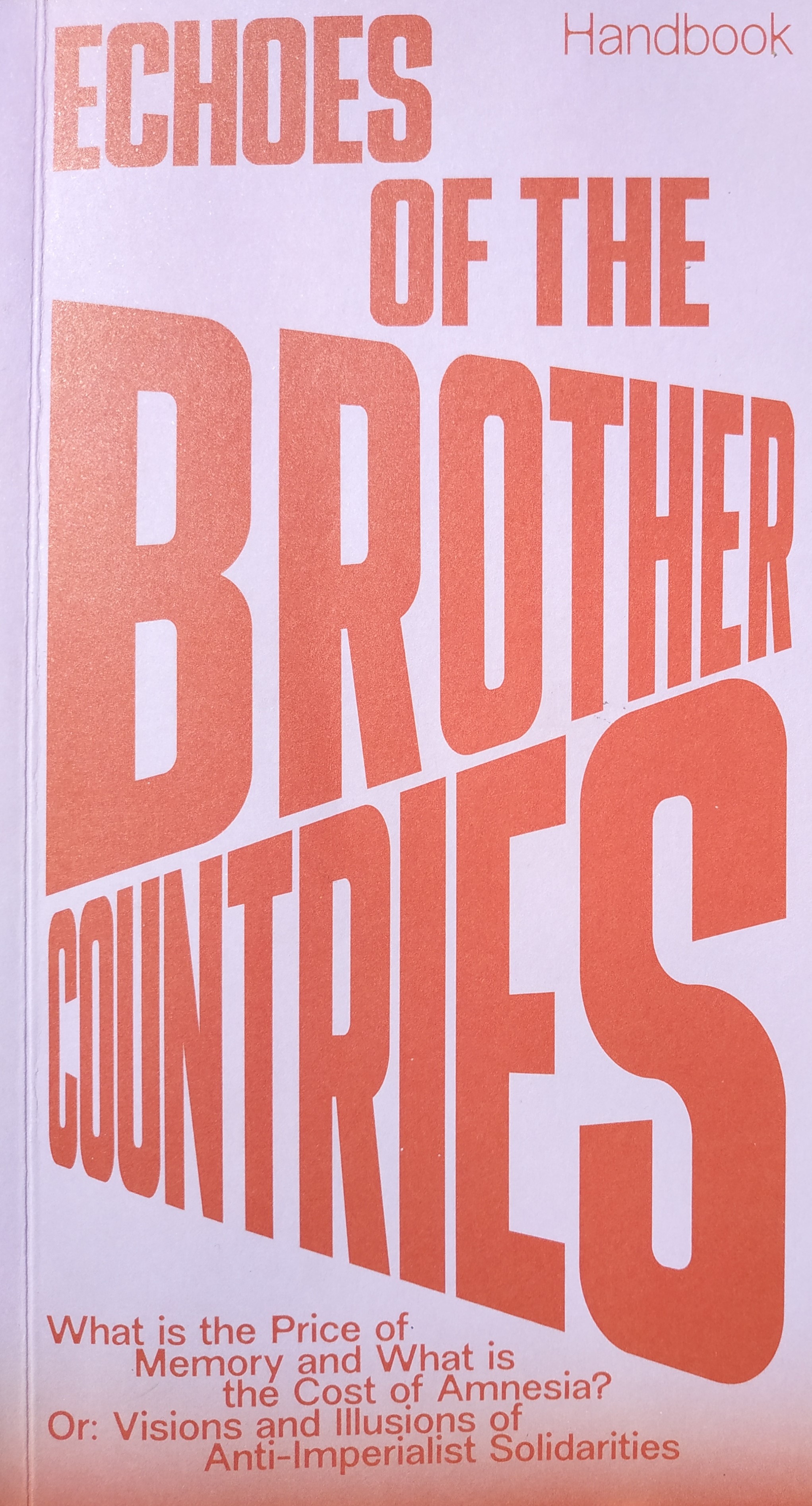
Between 1949 and 1990, thousands migrated to the GDR from countries such as Algeria, Angola, Chile, Cuba, Guinea-Bissau, Mozambique, Syria, and Vietnam. Their stories remain largely untold. The exhibition and research project Echoes of the Brother Countries is dedicated to the often overlooked political, economic, educational, and artistic links, as well as the exchange and migration movements between the GDR and other socialist-orientated states, the so-called brother countries. However, in the shadow of the iconographic depictions of solidarity such as a ‘united class struggle’ or ‘socialist internationalism’, there were other realities. Despite the GDR’s emphasis on fair labour conditions and professional development, migrants experienced labour exploitation, cramped living quarters, surveillance, curtailment of certain freedoms such as getting pregnant or being in a relationship, racist and xenophobic attacks, withheld wages and broken promises by their governments and the GDR government. However, there were also practices of solidarity across individual, local, national, and global scales, including GDR support for so-called anti-colonial, anti-imperialist, and liberation struggles in other parts of the world. How were these relations made possible? And how much of this history and its legacies remain visible today? The exhibition and research project brings together numerous positions that create a common space for remembrance, dialogue, and reflection on transnational solidarities and contradictions. With an extensive opening and educational programme, Echoes of the Brother Countries explores the question of how these interwoven histories continue to shape the former brother countries to this day, especially the lives of the people who migrated under the conditions of these alliances. The multidisciplinary project critically maps the GDR history and relations with its brother countries, a term that is critically taken up for its gendered problematics, and illusions of and allusions to equality. Amid erasures, gaps, and absences in broader public educational discourses, the project attempts to understand the reverberations of those histories in Germany as well as in the former brother countries to situate these relations as part of a global history of cultural movement and exchange. To the curatorial statement​​​​​​​.
With contributions by: Abed Abdi, Khaled Abdulwahed, Donald Acquaye, Maimuna Adam, Kais al-Zubaidi, Santos Chávez, Ivan Cibulka, Sarah Ama Duah, Nguyễn Lương Đức, Ângela Ferreira, Carla Filipe, Lea Grundig, Sami Hakki, Kiluanji Kia Henda, Intergenerational Solidarities: Graphic Novel Workshop, Isaac-Newton-Schule, Emile Itolo, Januário Jano, Hiwa K, Euridice Zaituna Kala, Martha Ketsela, Songhak Ky, Verena Kyselka, Heinz-Karl Kummer, Hernando León, Humberto López, MORUS-Oberschule, Nástio Mosquito, Olu Oguibe, César Olhagaray, Zohra Opoku, Charles Owusu, Minh Duc Pham, Gertraude Pohl, Elske Rosenfeld, Riad Ali Saad, Farkhondeh Shahroudi, Sophie-Brahe-Gemeinschaftsschule, Dito Tembe, Sung Tieu, Christoph Wetzel, Horst Weber, among others.
1 placówka posiada w zbiorach tę pozycję. Rozwiń informację, by zobaczyć szczegóły.
Wypożyczalnia
Są egzemplarze dostępne do wypożyczenia: sygn. Wystawy/ Wydarzenia artystyczne E.24 [Wypożyczalnia] (1 egz.)
Książka
W koszyku
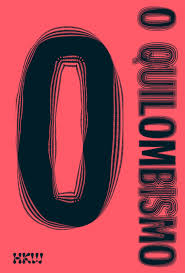
Aligning with the onset of the new year in the Yoruba calendar, HKW’s reopening from 2–4 June 2023 featured concerts, lectures, performances, processions, readings, and rituals, as well as the launch of the exhibition O Quilombismo: Of Resisting and Insisting. Of Flight as Fight. Of Other Democratic Egalitarian Political Philosophies. Artists, activists, scholars, neighbours, and guests from far and wide gathered to imagine new forms of cultural and political resistance. Beyond thinking with quilombismo as a metaphor, this project deliberated on the intellectual and political implications of a philosophy and ideology based on the quilombos, mapping the spaces that they have made and continue to make possible today. Featuring over 100 full colour images and installation views, the O Quilombismo Album is a visual record of these acts of opening again, a celebration of conviviality.
Featuring: Laeïla Adjovi, Amina Agueznay, Ana Beatriz Almeida (in collaboration with / in Zusammenarbeit mit Cici de Oxalá), Archive Ensemble, Albert Artwell, Barby Asante, Leo Asemota, Maria Auxiliadora, Carol Barreto, Farid Belkahia, Chef Fatmata Binta, Everald Brown, María Magdalena Campos-Pons, Baba Murah & Ensemble, Forum Brasil and Ilê Obá Sileké, Candomblé House in Berlin, and Rasiel Almanza Cairo, nora chipaumire and Germaine Acogny, Ange Dakouo, Bastin Santan Diggekar, Diana Ejaita, Rotimi Fani-Kayode, Adama Delphine Fawundu, Tanka Fonta, Saliou Cissokho and Eden Meier, Gwladys Gambie, vanessa german, Assaf Gruber, Bibijan Babushab Gunjavathi, Badimabi Gafarsab Ugrani, Saidambi Imamasab Naik, Shakirambi Ganishab Tattongi, Hattarabi Maulasab Gunjavati, Antonio Jose Guzmán & Iva Jankovic, Houngan Jean-Daniel Lafontant (with Claude Saturne), Hermosa Intervención, Lisa Hilli, Nikau Hindin, Masimba Hwati and friends (Laura Anh Thu Dang, Luka Mukhavele, Leteris Krysalis), Hayv Kahraman, Grada Kilomba, Li Jiun-Yang, Awilo Longomba, Aristote Mago, Ibrahim Mahama, Edna Martinez, Georgina Maxim, Tuli Mekondjo, Demond Melancon, Marie-Claire Messouma Manlanbien, Oscar Murillo, Museu de Arte Negra, Nontsikelelo Mutiti, Abdias Nascimento, Eustáquio Neves, Lizette Nin, Olu Oguibe, Temitayo Ogunbiyi, Owusu-Ankomah, Bernardo Oyarzún, Moisés Patrício, Anand Patwardhan, Zica Pires, Alberto Pitta, Mallica ‘Kapo’ Reynolds, Oumou Sangaré, Joshua Serafin, Snowfuks, Taller Portobelo, Jasmine Thomas-Girvan, Truong Cong Tung, Glicéria Tupinambá, Rubem Valentim, Celia Vasquez Yui (with / mit Diana Ruiz Vasquez), Charmaine Watkiss, Hajra Waheed, Kaylene Whiskey, Sawangwongse Yawnghwe, Bruno Zhu.
1 placówka posiada w zbiorach tę pozycję. Rozwiń informację, by zobaczyć szczegóły.
Wypożyczalnia
Są egzemplarze dostępne do wypożyczenia: sygn. Sztuka 615 [Wypożyczalnia] (1 egz.)
Pozycja została dodana do koszyka. Jeśli nie wiesz, do czego służy koszyk, kliknij tutaj, aby poznać szczegóły.
Nie pokazuj tego więcej