Sorting
Source
Katalog Mediateki
(4)
Form of Work
Książki
(4)
Status
available
(4)
Branch
Wypożyczalnia
(4)
Author
Cheetham Mark A. (Mark Arthur) (1954- )
(1)
Emmerson Richard Kenneth
(1)
Leonardi Nicoletta
(1)
Natale Simone (1981-)
(1)
O'Brien David (1962-)
(1)
Year
2010 - 2019
(4)
Country
Poland
(4)
Language
Polish
(4)
Subject
Delacroix, Eugène (1798-1863)
(1)
Ekologia
(1)
Fotografia
(1)
Historia sztuki
(1)
Iluminatorstwo średniowieczne
(1)
Rękopisy iluminowane
(1)
Sztuka
(1)
Sztuka apokaliptyczna
(1)
Subject: work
Biblia
(1)
4 results Filter
Book
In basket
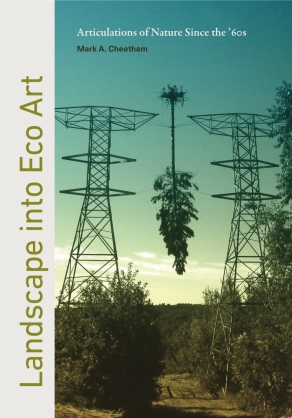
Dedicated to an articulation of the earth from broadly ecological perspectives, eco art is a vibrant subset of contemporary art that addresses the widespread public concern with rapid climate change and related environmental issues. In Landscape into Eco Art, Mark Cheetham systematically examines connections and divergences between contemporary eco art, land art of the 1960s and 1970s, and the historical genre of landscape painting. Through eight thematic case studies that illuminate what eco art means in practice, reception, and history, Cheetham places the form in a longer and broader art-historical context. He considers a wide range of media—from painting, sculpture, and photography to artists’ films, video, sound work, animation, and installation—and analyzes the work of internationally prominent artists such as Olafur Eliasson, Nancy Holt, Mark Dion, and Robert Smithson. In doing so, Cheetham reveals eco art to be a dynamic extension of a long tradition of landscape depiction in the West that boldly enters into today’s debates on climate science, government policy, and our collective and individual responsibility to the planet. An ambitious intervention into eco-criticism and the environmental humanities, this volume provides original ways to understand the issues and practices of eco art in the Anthropocene. Art historians, humanities scholars, and lay readers interested in contemporary art and the environment will find Cheetham’s work valuable and invigorating.
This item is available in one branch. Expand information to see details.
Wypożyczalnia
There are copies available to loan: sygn. Sztuka 471 [Wypożyczalnia] (1 egz.)
No cover
Book
In basket
This item is available in one branch. Expand information to see details.
Wypożyczalnia
There are copies available to loan: sygn. Grafika/ Rysunek 26 [Wypożyczalnia] (1 egz.)
No cover
Book
In basket
This item is available in one branch. Expand information to see details.
Wypożyczalnia
There are copies available to loan: sygn. Fotografia 97 [Wypożyczalnia] (1 egz.)
Book
In basket
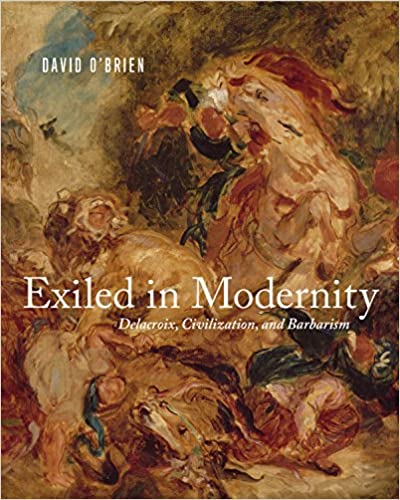
Notions of civilization and barbarism were intrinsic to Eugène Delacroix’s artistic practice: he wrote regularly about these concepts in his journal, and the tensions between the two were the subject of numerous paintings, including his most ambitious mural project, the ceiling of the Library of the Chamber of Deputies in the Palais Bourbon. Exiled in Modernity delves deeply into these themes, revealing why Delacroix’s disillusionment with modernity increasingly led him to seek spiritual release or epiphany in the sensual qualities of painting. While civilization implied a degree of control and the constraint of natural impulses for Delacroix, barbarism evoked something uncontrolled and impulsive. Seeing himself as part of a grand tradition extending back to ancient Greece, Delacroix was profoundly aware of the wealth and power that set nineteenth-century Europe apart from the rest of the world. Yet he was fascinated by civilization’s chaotic underbelly. In analyzing Delacroix’s art and prose, David O’Brien illuminates the artist’s effort to reconcile the erudite, tradition-bound aspects of painting with a desire to reach viewers in a more direct, unrestrained manner. Focusing chiefly on Delacroix’s musings about civilization in his famous journal, his major mural projects on the theme of civilization, and the place of civilization in his paintings of North Africa and of animals, O’Brien links Delacroix’s increasingly pessimistic view of modernity to his desire to use his art to provide access to a more fulfilling experience. With more than one hundred illustrations, this original, astute analysis of Delacroix and his work explains why he became an inspiration for modernist painters over the half-century following his death. Art historians and scholars of modernism especially will find great value in O’Brien’s work.
This item is available in one branch. Expand information to see details.
Wypożyczalnia
There are copies available to loan: sygn. Sztuka 479 [Wypożyczalnia] (1 egz.)
The item has been added to the basket. If you don't know what the basket is for, click here for details.
Do not show it again