Sortowanie
Źródło opisu
Katalog Mediateki
(5)
Forma i typ
Książki
(5)
Dostępność
dostępne
(5)
Placówka
Wypożyczalnia
(5)
Autor
Amos Johanna
(1)
Barbieri Donatella
(1)
Binkley Lisa
(1)
Dormor Catherine
(1)
Edwards Lydia
(1)
Kjellmer Viveka
(1)
Rosen Astrid von
(1)
Trimingham Melissa
(1)
Rok wydania
2020 - 2026
(5)
Kraj wydania
Anglia
(4)
Polska
(1)
Język
angielski
(5)
Temat
Ubiór
(2)
Filozofia
(1)
Krawiectwo
(1)
Moda
(1)
Odzież damska
(1)
Performance
(1)
Robótki ręczne
(1)
Scenografia
(1)
Sztuka
(1)
Tożsamość społeczna
(1)
Gatunek
Teatr
(2)
Sztuka
(1)
5 wyników Filtruj
Książka
W koszyku
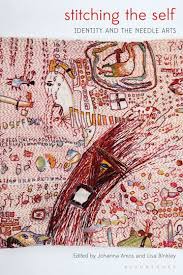
The needle arts are traditionally associated with the decorative, domestic, and feminine. Stitching the Self sets out to expand this narrow view, demonstrating how needlework has emerged as an art form through which both objects and identities – social, political, and often non-conformist – are crafted. Bringing together the work of ten art and craft historians, this illustrated collection focuses on the interplay between craft and artistry, amateurism and professionalism, and re-evaluates ideas of gendered production between 1850 and the present. From quilting in settler Canada to the embroidery of suffragist banners and the needlework of the Bloomsbury Group, it reveals how needlework is a transformative process – one which is used to express political ideas, forge professional relationships, and document shifting identities. With a range of methodological approaches, including object-based, feminist, and historical analyses, Stitching the Self examines individual and communal involvement in a range of textile practices. Exploring how stitching shapes both self and world, the book recognizes the needle as a powerful tool in the fight for self-expression.
1 placówka posiada w zbiorach tę pozycję. Rozwiń informację, by zobaczyć szczegóły.
Wypożyczalnia
Są egzemplarze dostępne do wypożyczenia: sygn. Sztuka 613 [Wypożyczalnia] (1 egz.)
Książka
W koszyku
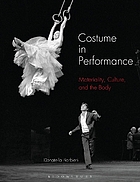
This beautifully illustrated book conveys the centrality of costume to live performance. Finding associations between contemporary practices and historical manifestations, costume is explored in six thematic chapters, examining the transformative ritual of costuming; choruses as reflective of society; the grotesque, transgressive costume; the female sublime as emancipation; costume as sculptural art in motion; and the here-and-now as history. Viewing the material costume as a crucial aspect in the preparation, presentation and reception of live performance, the book brings together costumed performances through history. These range from ancient Greece to modern experimental productions, from medieval theatre to modernist dance, from the 'fashion plays' to contemporary Shakespeare, marking developments in both culture and performance. Revealing the relationship between dress, the body and human existence, and acknowledging a global as well as an Anglo and Eurocentric perspective, this book shows costume's ability to cross both geographical and disciplinary borders. Through it, we come to question the extent to which the material costume actually co-authors the performance itself, speaking of embodied histories, states of being and never-before imagined futures, which come to life in the temporary space of the performance. With a contribution by Melissa Trimingham, University of Kent, UK.
Ta pięknie ilustrowana książka ukazuje centralną rolę kostiumu w performansie na żywo. Odkrywając związki między współczesnymi praktykami a historycznymi przejawami, kostium jest zgłębiany w sześciu tematycznych rozdziałach, analizując transformacyjny rytuał kostiumów; chóry jako odzwierciedlenie społeczeństwa; groteskowy, transgresywny kostium; kobiecą wzniosłość jako emancypację; kostium jako sztukę rzeźbiarską w ruchu; oraz tu i teraz jako historię. Postrzegając materialny kostium jako kluczowy aspekt przygotowania, prezentacji i odbioru spektaklu na żywo, książka gromadzi spektakle kostiumowe na przestrzeni dziejów. Ich zakres rozciąga się od starożytnej Grecji po współczesne produkcje eksperymentalne, od teatru średniowiecznego po taniec modernistyczny, od „sztuek mody” po współczesnego Szekspira, wyznaczając rozwój zarówno w kulturze, jak i performansie. Ujawniając związek między strojem, ciałem i ludzką egzystencją, a także uznając perspektywę globalną, anglo- i europocentryczną, książka ta pokazuje zdolność kostiumu do przekraczania granic geograficznych i dyscyplinarnych. Dzięki temu dochodzimy do pytania, w jakim stopniu materialny kostium jest w istocie współautorem samego spektaklu, mówiąc o ucieleśnionych historiach, stanach bytu i nigdy wcześniej nie wyobrażanych przyszłościach, które ożywają w tymczasowej przestrzeni spektaklu. Z udziałem Melissy Trimingham, University of Kent, Wielka Brytania.
1 placówka posiada w zbiorach tę pozycję. Rozwiń informację, by zobaczyć szczegóły.
Wypożyczalnia
Są egzemplarze dostępne do wypożyczenia: sygn. Teatr/ Taniec/ Performence 75 [Wypożyczalnia] (1 egz.)
Książka
W koszyku
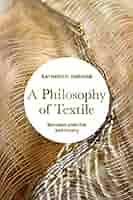
A philosophy of textile : between practice and theory / Catherine Dormor. - London : Bloomsbury Visual Arts, 2020. - VIII, [2], 130, [18] stron : ilustracje ; 24 cm.
Forma i typ
Temat
Textile is at once a language, a concept and a material thing. Philosophers such as Plato, Deleuze and Derrida have notably drawn on weaving processes to illustrate their ideas, and artists such as Ann Hamilton, Louise Bourgeois and Chiharu Shiota explore matters such as the seam, the needle and thread, and the flow of viscous materials in their work. Yet thinking about textile and making textile are often treated as separate and distinct practices, rather than parallel modes. This beautifully illustrated book brings together for the first time the language and materiality of textile to develop new models of thinking, writing and making. Through the work of thinkers such as Roland Barthes, Hélène Cixous and Luce Irigaray, and international artists like Eva Hesse and Helen Chadwick, textile practitioner, theorist and writer Catherine Dormor puts forward a new philosophy of textile. Exploring the material behaviours and philosophical language of folding, shimmering, seaming, viscosity, fraying and caressing, Dormor demonstrates how textile practice and theory are intricately woven together.
1 placówka posiada w zbiorach tę pozycję. Rozwiń informację, by zobaczyć szczegóły.
Wypożyczalnia
Są egzemplarze dostępne do wypożyczenia: sygn. Sztuka 612 [Wypożyczalnia] (1 egz.)
Książka
W koszyku
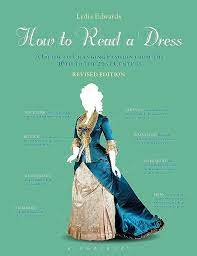
Fashion is ever-changing, and while some styles mark a dramatic departure from the past, many exhibit subtle differences from year to year that are not always easily identifiable. With overviews of each key period and detailed illustrations for each new style, How to Read a Dress is an appealing and accessible guide to women's fashion across five centuries. Each entry includes annotated color images of historical garments, outlining important features and highlighting how styles have developed over time, whether in shape, fabric choice, trimming, or undergarments. Readers learn how garments were constructed and where their inspiration stemmed from at key points in history – as well as how dresses have varied in type, cut, detailing and popularity according to the occasion and the class, age and social status of the wearer. This new edition includes additional styles to illustrate and explain the journey between one style and another; larger images to allow closer investigation of details of dress; examples of lower and working-class, as well as middle-class, clothing; and a completely new chapter covering the 1980s to 2020. The latter demonstrates how the late 20th century and early 21st century firmly left the dress behind as a requirement, but retained it as a perennially popular choice and illustrates how far the traditional boundaries of 'the dress' have been pushed (even including reference to a newly non-binary appreciation of the garment), and the intellectual shifts in the way women's fashion is both inspired and inspires. With these new additions, How to Read a Dress, revised edition, presents a complete and up-to-date picture of 'the dress' in all its forms, across the centuries, and taking into account different sartorial and social experiences. It is the ideal tool for anyone who has ever wanted to know their cartridge pleats from their Récamier ruffles. Equipping the reader with all the information they need to 'read' a dress, this is the ultimate guide for students, researchers, and anyone interested in historical fashion.
Moda ciągle się zmienia i chociaż niektóre style oznaczają dramatyczne odejście od przeszłości, wiele z nich wykazuje subtelne różnice z roku na rok, które nie zawsze są łatwe do zidentyfikowania. Dzięki przeglądom poszczególnych kluczowych okresów i szczegółowym ilustracjom każdego nowego stylu „Jak czytać sukienkę” jest atrakcyjnym i przystępnym przewodnikiem po modzie damskiej na przestrzeni pięciu stuleci. Każdy wpis zawiera kolorowe zdjęcia odzieży historycznej z adnotacjami, przedstawiające ważne cechy i podkreślające rozwój stylów na przestrzeni czasu, niezależnie od tego, czy chodzi o kształt, dobór materiału, wykończenia czy bieliznę. Czytelnicy dowiadują się, jak konstruowano ubrania i skąd czerpano ich inspirację w kluczowych momentach historii, a także jak suknie różniły się rodzajem, krojem, detalami i popularnością w zależności od okazji oraz klasy, wieku i statusu społecznego noszącej. To nowe wydanie zawiera dodatkowe style ilustrujące i wyjaśniające podróż między jednym stylem a drugim; większe zdjęcia, aby umożliwić dokładniejsze zbadanie szczegółów ubioru; przykłady ubioru niższego, robotniczego i średniego; oraz zupełnie nowy rozdział obejmujący okres od lat 80. do 2020. Ten ostatni pokazuje, jak na przełomie XX i XXI wieku zdecydowanie porzucono strój jako wymóg, ale pozostawiono go jako wiecznie popularny wybór i ilustruje, jak daleko odbiegły tradycyjne granice „ dress” (nawet włączając w to odniesienie do nowo niebinarnego uznania ubioru) oraz intelektualne zmiany w sposobie, w jaki moda damska jest zarówno inspirowana, jak i inspiruje. Dzięki tym nowym dodatkom, poprawione wydanie Jak czytać sukienkę przedstawia pełny i aktualny obraz „stroju” we wszystkich jego formach na przestrzeni wieków, biorąc pod uwagę różne doświadczenia krawieckie i społeczne. Jest to idealne narzędzie dla każdego, kto kiedykolwiek chciał poznać swoje plisy kartuszowe od falbanek Récamier. Wyposażając czytelnika we wszystkie informacje potrzebne do „odczytania” sukni, jest to doskonały przewodnik dla studentów, badaczy i wszystkich zainteresowanych modą historyczną.
1 placówka posiada w zbiorach tę pozycję. Rozwiń informację, by zobaczyć szczegóły.
Wypożyczalnia
Są egzemplarze dostępne do wypożyczenia: sygn. Buty/ Ubiór/ Biżuteria 91 [Wypożyczalnia] (1 egz.)
Książka
W koszyku
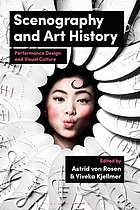
"Scenography and Art History" reimagines scenography as a critical concept for art history, and is the first book to demonstrate the importance and usefulness of this concept for art historians and scholars in related fields. It provides a vital evaluation of the contemporary importance of scenography as a critical tool for art historians and scholars from related branches of study addressing phenomena such as witchy designs, Early Modern festival books, live rock performances, digital fashion photography, and outdoor dance interventions. With its nuanced and detailed case studies, this book is an innovative contribution to ongoing debates within art history and visual studies concerning multisensory events. It extends the existing literature by demonstrating the importance of a reimagined scenography concept for comprehending historical and contemporary art histories and visual cultures more broadly. The book contends that scenography is no longer restricted to the traditional space of the theatre, but has become an important concept for approaching art historical and contemporary objects and events. It explores scenography not solely as a critical approach and theoretical concept, but also as an important practice linked with unrecognized labour and broader political, social and gendered issues in a great variety of contexts, such as festive culture, sacred settings, fashion, film, or performing arts. Designed as a key resource for students, teachers and researchers in art history, visual studies, and related subjects, the book, through its cross-disciplinary frame, does consider, implicitly and explicitly, the roles of both scenography and art in society.
„Scenografia i historia sztuki” na nowo definiuje scenografię jako kluczowe pojęcie dla historii sztuki i jest pierwszą książką, która dowodzi znaczenia i użyteczności tej koncepcji dla historyków sztuki i badaczy z pokrewnych dziedzin. Stanowi ona istotną ocenę współczesnego znaczenia scenografii jako kluczowego narzędzia dla historyków sztuki i badaczy z pokrewnych dziedzin, zajmujących się takimi zjawiskami, jak projekty czarownic, wczesnomodernistyczne książki festiwalowe, występy rockowe na żywo, cyfrowa fotografia mody i plenerowe interwencje taneczne. Dzięki niuansom i szczegółowym studiom przypadków, książka ta stanowi nowatorski wkład w toczące się debaty w historii sztuki i badaniach wizualnych dotyczące wydarzeń multisensorycznych. Poszerza ona istniejącą literaturę, demonstrując znaczenie nowej koncepcji scenografii dla szerszego rozumienia historycznych i współczesnych historii sztuki oraz kultur wizualnych. Książka dowodzi, że scenografia nie jest już ograniczona do tradycyjnej przestrzeni teatru, ale stała się ważnym pojęciem w podejściu do historycznych i współczesnych obiektów i wydarzeń artystycznych. Bada scenografię nie tylko jako podejście krytyczne i koncepcję teoretyczną, ale także jako ważną praktykę powiązaną z nieuznawaną pracą oraz szerszymi zagadnieniami politycznymi, społecznymi i związanymi z płcią w różnorodnych kontekstach, takich jak kultura świąteczna, miejsca kultu, moda, film czy sztuki performatywne. Zaprojektowana jako kluczowe źródło wiedzy dla studentów, nauczycieli i badaczy historii sztuki, studiów wizualnych i dziedzin pokrewnych, książka, dzięki swojej interdyscyplinarnej strukturze, w sposób dorozumiany i jawny, rozważa zarówno rolę scenografii, jak i sztuki w społeczeństwie.
1 placówka posiada w zbiorach tę pozycję. Rozwiń informację, by zobaczyć szczegóły.
Wypożyczalnia
Są egzemplarze dostępne do wypożyczenia: sygn. Teatr/ Taniec/ Performence 74 [Wypożyczalnia] (1 egz.)
Pozycja została dodana do koszyka. Jeśli nie wiesz, do czego służy koszyk, kliknij tutaj, aby poznać szczegóły.
Nie pokazuj tego więcej