28338
Książka
W koszyku
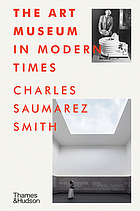
The art museum in modern times / Charles Saumarez Smith. - New York : Thames & Hudson Inc., 2021. - 271 stron : ilustracje ; 24 cm.
The National Portrait Gallery, the National Gallery and the Royal Academy all saw either radical architectural interventions or rethinks of their mission under Charles Saumarez Smith's leadership, making him uniquely qualified to explore the ways in which art museums have changed over the past century and examine where they might be headed in the future. For this book, Saumarez Smith has undertaken an odyssey to art museums across the globe. From Tate Modern in London to the Benesse House Museum on the Japanese island of Naoshima; from the Getty Center in Los Angeles to the Museum of New and Old Art, a ferry-ride from Hobart in Tasmania; from the Pompidou Centre in Paris to the West Bund Museum in Shanghai--he has visited them all, casting an acute eye on the way the experience of art is shaped by the buildings that house it and the organizing principles by which it is displayed. What has changed over the past century? Where the public once visited museums to be educated in art history, he argues, they are now more likely to be in search of a private, aesthetic experience. Museum displays that were automatically didactic, chronological and either national or Western in viewpoint are now thematic and global. While museums used to be invariably in city centres, they may now be in remote locations, destinations of cultural pilgrimage. And where architects once created neutral spaces in which to display art, they now build spectacular architectural landmarks, stamping an identity on run-down neighbourhoods and sparking regeneration through cultural tourism.
Narodowa Galeria Portretów, Galeria Narodowa i Akademia Królewska były świadkami radykalnych interwencji architektonicznych lub ponownego przemyślenia swojej misji pod przywództwem Charlesa Saumareza Smitha, dzięki czemu ma on wyjątkowe kwalifikacje do badania sposobów, w jakie muzea sztuki zmieniły się w ciągu ostatniego stulecia i zbadania, gdzie mogą kierować nimi w przyszłości. W tej książce Saumarez Smith wybrał się w podróż do muzeów sztuki na całym świecie. Od Tate Modern w Londynie po Benesse House Museum na japońskiej wyspie Naoshima; z Getty Center w Los Angeles do Museum of New and Old Art, rejs promem z Hobart na Tasmanii; od Centrum Pompidou w Paryżu po West Bund Museum w Szanghaju – odwiedził je wszystkie, uważnie przyglądając się sposobowi, w jaki doświadczanie sztuki jest kształtowane przez budynki, w których się znajduje, oraz zasady organizacji, według których jest prezentowana. Co zmieniło się w ciągu ostatniego stulecia? Twierdzi, że tam, gdzie kiedyś publiczność odwiedzała muzea, aby uczyć się historii sztuki, teraz jest bardziej prawdopodobne, że będzie szukać prywatnych, estetycznych doświadczeń. Ekspozycje muzealne, które były automatycznie dydaktyczne, chronologiczne i z narodowego lub zachodniego punktu widzenia, są teraz tematyczne i globalne. Kiedyś muzea zawsze znajdowały się w centrach miast, teraz mogą znajdować się w odległych miejscach, miejscach pielgrzymek kulturowych. Tam, gdzie kiedyś architekci tworzyli neutralne przestrzenie do wystawiania dzieł sztuki, teraz budują spektakularne zabytki architektury, odciskając piętno na zrujnowanych dzielnicach i pobudzając rewitalizację poprzez turystykę kulturalną.
Status dostępności:
Wypożyczalnia
Są egzemplarze dostępne do wypożyczenia: sygn. Kuratorstwo i Muzealnictwo 2 [Wypożyczalnia] (1 egz.)
Strefa uwag:
Uwaga dotycząca zawartości
Introduction: The Traditional Museum 1. The Modern Museum. The Museum of Modern Art, New York (1939) ; Louisiana, Humlebaek (1958) ; Guggenheim Museum, New York (1959) ; Castelvecchio Museum, Verona (1964) ; Whitney Museum, New York (1966) ; New National Gallery, Berlin (1968) ; Sao Paulo Museum of Art, Sao Paulo (1968) ; Christ Church Picture Gallery, Oxford (1968) ; Kimbell Art Museum, Fort Worth (1972) ; Centre Pompidou, Paris (1977) ; Yale Center for British Art, New Haven (1977) ; Sainsbury Centre for Visual Arts, Norwich (1978) ; East Building, National Gallery of Art, Washington, DC (1978) 2. The Postmodern Museum. Neue Staatsgalerie, Stuttgart (1984) ; Saatchi Gallery, London (1985) ; Musee d'Orsay, Paris (1986) ; The Menil Collection, Houston (1987) ; The Louvre Pyramid, Paris (1989) ; The Sainsbury Wing, National Gallery, London (1991) ; Benesse House Museum, Naoshima (1992) ; Getty Center, Los Angeles (1997) ; Guggenheim Museum, Bilbao (1997) ; Beyeler Foundation, Basel (1997) 3. Museums for the New Millennium. Tate Modern, London (2000) ; Ondaatje Wing, National Portrait Gallery, London (2000) ; Neue Galerie, New York (2001) ; Dia:Beacon, Beacon, NY (2003) ; Museum of Modern Art, New York (2004) ; 21st Century Museum of Contemporary Art, Kanazawa (2004) ; Kolumba, Cologne (2007) ; Neues Museum, Berlin (2009) ; Hepworth Wakefield, Yorkshire (2011) ; Turner Contemporary, Margate (2011) 4. The Museum Reinvented. MONA, Hobart (2011) ; Louvre Museum, Lens (2012) ; The Barnes Foundation, Philadelphia (2012) ; Whitney Museum, New York (2015) ; The Broad, Los Angeles (2015) ; Blavatnik Building, Tate Modern, London (2016) ; Louvre Abu Dhabi (2017) ; The Royal Academy of Arts, London (2018) ; Muzeum Susch, Susch (2019) ; West Bund Museum, Shanghai (2019) 5. Key Issues. The role of the client ; The role of the architect ; The rise of the private museum ; The morality of wealth ; The end of history ; The changing characteristics of works of art ; Globalization ; The digital world ; The search for the sacred ; Audience expectations ; Conclusion.
Recenzje:
Pozycja została dodana do koszyka. Jeśli nie wiesz, do czego służy koszyk, kliknij tutaj, aby poznać szczegóły.
Nie pokazuj tego więcej