Sorting
Source
Katalog Mediateki
(3)
Form of Work
Książki
(3)
Status
available
(2)
unavailable
(1)
Branch
Wypożyczalnia
(3)
Author
Cluitmans Laurie
(1)
González Rommy
(1)
Hendrikx Bas
(1)
Ostendorf-Rodríguez Yasmine
(1)
Year
2020 - 2026
(3)
Country
Poland
(3)
Language
English
(3)
Subject
Ekofeminizm
(1)
Ekologia
(1)
Filozofia
(1)
Grzyby
(1)
Homoseksualizm
(1)
Kształtowanie krajobrazu
(1)
Kuratorstwo (sztuka)
(1)
Mutualizm
(1)
Mykologia
(1)
Parki i ogrody
(1)
Wystawy sztuki
(1)
Subject: place
Ameryka Łacińska
(1)
Genre/Form
Architektura krajobrazu
(1)
Sztuka ogrodowa
(1)
3 results Filter
Book
In basket
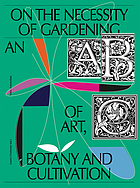
"On the Necessity of Gardening' tells the story of the garden as a rich source of inspiration. Over the centuries, artists, writers, poets and thinkers have each described, depicted and designed the garden in different ways. In medieval art, the garden was a reflection of paradise, a place of harmony and fertility, shielded from worldly problems. In the eighteenth century this image tilted: the garden became a symbol of worldly power and politics. The Anthropocene, the era in which man completely dominates nature with disastrous consequences, is forcing us to radically rethink the role we have given nature in recent decades. There is a renewed interest in the theme of the garden among contemporary makers. It is not a romantic desire that drives them, but rather a call for a new awareness of our relationship with the earth. Through many different essays and an extensive abecedarium, 'On the Necessity of Gardening' reflects on the garden as a metaphor for society.
This item is available in one branch. Expand information to see details.
Wypożyczalnia
There are copies available to loan: sygn. Ogrody 8 [Wypożyczalnia] (1 egz.)
Book
In basket
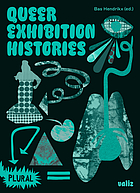
Queer exhibition histories / editor Bas Hendrikx. - Amsterdam : Valiz, 2023. - 285 stron : ilustracje ; 24 cm.
Queer Exhibition Histories is composed of case studies, interviews and essays that emphasize different queer exhibitions and their modes of presentation and archiving. Many of these projects were short-lived or were executed between the walls of the private or domestic space, far beyond the scope of any institutional recognition. Therefore, the exhibitions materialized on limited budgets, were hardly documented and received barely any media coverage. For this reason, the legacy of these projects is highly dependent on personal archives, memories and paraphernalia, whereof the entries are not always easy to find. The events were not only artistic, but they could equally be discursive, activist and educational, or serve as a tool for community building. At the intersection of queerness and contemporary art, Queer Exhibition Histories investigates how the efforts of LGBTQIA+ artists and curators have advanced their public presence.
Historie wystaw queer składają się ze studiów przypadków, wywiadów i esejów, które podkreślają różne wystawy queer oraz sposoby ich prezentacji i archiwizacji. Wiele z tych projektów miało charakter krótkotrwały lub realizowano pomiędzy ścianami przestrzeni prywatnej lub domowej, daleko poza zasięgiem jakiegokolwiek instytucjonalnego uznania. Dlatego też wystawy odbywały się przy ograniczonych budżetach, były słabo udokumentowane i nie cieszyły się dużym zainteresowaniem mediów. Z tego powodu dziedzictwo tych projektów w dużym stopniu zależy od osobistych archiwów, wspomnień i akcesoriów, w których wpisy nie zawsze są łatwe do znalezienia. Wydarzenia miały nie tylko charakter artystyczny, ale mogły mieć także charakter dyskursywny, aktywistyczny i edukacyjny lub służyć jako narzędzie budowania społeczności. Na styku queerowości i sztuki współczesnej Queer Exhibition Histories bada, w jaki sposób wysiłki artystów i kuratorów LGBTQIA+ poprawiły ich obecność publiczną.
This item is available in one branch. Expand information to see details.
Wypożyczalnia
All copies are currently on loan: sygn. Trans-queer 49 [Wypożyczalnia] (1 egz.)
Book
In basket
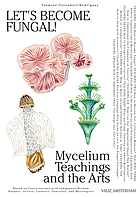
There is a growing interest in fungi and mycelium as a material, the ever-branching connecting threads of the fungal world. The entanglements and how this rhizomatic network functions is not just a fascinating ecological system and material, but carries a profound usefulness as a metaphor for our potential new systems, ways of thinking and behaviors. Let's Become Fungal! takes its inspiration from the world of art and mycology and shares innovative practices from Latin America and the Caribbean that are rooted in multispecies collaboration, symbiosis, alliances, non-monetary resource exchange, decentralization, bottom-up methods and mutual dependency all in line with the behavior of the mycelium. Every chapter is phrased as a question. They do not lead to answers, but to twelve teachings addressing for instance collaboration, decoloniality, non-linearity, toxicity, mobilization, biomimicry, death, and being non-binary. Simultaneously it ventures deeper into the world of fungi. The teachings from the fungus may inspire artists, collectives, organizations, educators, policy-makers, designers, scientists, anthropologists, change-makers, curators, urbanists, activists, gardeners, community-leaders, farmers, and many others, to become more fungal in their ways of working and being.
Rośnie zainteresowanie grzybami i grzybnią jako materiałem, stale rozgałęziającymi się nićmi łączącymi świat grzybów. Splątania i sposób funkcjonowania tej kłączowej sieci to nie tylko fascynujący system i materiał ekologiczny, ale niesie ze sobą głęboką użyteczność jako metafora naszych potencjalnych nowych systemów, sposobów myślenia i zachowań. Zostańmy grzybami! czerpie inspirację ze świata sztuki i mikologii oraz dzieli się innowacyjnymi praktykami z Ameryki Łacińskiej i Karaibów, które są zakorzenione we współpracy wielogatunkowej, symbiozie, sojuszach, wymianie zasobów niepieniężnych, decentralizacji, metodach oddolnych i wzajemnej zależności, a wszystko to zgodnie z zachowanie grzybni. Każdy rozdział jest sformułowany w formie pytania. Nie prowadzą do odpowiedzi, ale do dwunastu nauk dotyczących na przykład współpracy, dekolonialności, nieliniowości, toksyczności, mobilizacji, biomimikry, śmierci i niebinarności. Jednocześnie zapuszcza się głębiej w świat grzybów. Nauki płynące z grzyba mogą inspirować artystów, kolektywy, organizacje, pedagogów, decydentów, projektantów, naukowców, antropologów, twórców zmian, kuratorów, urbanistów, aktywistów, ogrodników, liderów społeczności, rolników i wielu innych, aby stać się bardziej grzybicze w sposobie pracy i bycia.
This item is available in one branch. Expand information to see details.
Wypożyczalnia
There are copies available to loan: sygn. Nauki humanistyczne 780 [Wypożyczalnia] (1 egz.)
The item has been added to the basket. If you don't know what the basket is for, click here for details.
Do not show it again